Key points
- A performance level describes a building after an earthquake: ready to use, in need of repair, or close to collapse.
- The method: divide the displacement at the performance point by the building height and compare it with the ATC-40 drift limits, such as 0.01 for Immediate Occupancy.
- For the maximum considered earthquake, the target for Halim Station was at least Life Safety.
For a building owner, a displacement in metres means little. The practical question is: after a major earthquake, can the building be used, does it need repair, or is it unsafe to enter? The answer lies in the structural performance level. This article explains these levels and how they are derived from a pushover analysis.
The previous part covered three methods for finding the performance point.
What is a structural performance level?
A performance level describes how much damage a building suffers in an earthquake of a given intensity. It links the technical analysis to everyday decisions: can the building reopen straight away, how long must it close, and are the occupants protected?
Two naming systems are common, from FEMA 356 / FEMA 440 and from ATC-40. The terms differ slightly, but the order is the same: from the least damage to near collapse.
FEMA 356 and FEMA 440 performance levels
- Operational: the building is practically undamaged and all functions, including services, keep running.
- Immediate Occupancy (IO): structural damage is very minor. The building is safe to reoccupy immediately, though some non-structural items may need light repair.
- Life Safety (LS): structural damage is significant but some margin against collapse remains. Occupants are protected, but the building needs inspection and repair before reuse.
- Collapse Prevention (CP): damage is severe and the building is close to collapse. It still stands, but it is not safe to enter.
ATC-40 performance levels and drift limits
ATC-40 uses four names: Immediate Occupancy, Damage Control, Life Safety and Structural Stability. Each level has a limit on the drift ratio, displacement divided by height:
| Drift limit | Immediate Occupancy | Damage Control | Life Safety | Structural Stability |
|---|---|---|---|---|
| Maximum total drift | 0.01 | 0.01–0.02 | 0.02 | 0.33 Vi/Pi |
| Maximum inelastic drift | 0.005 | 0.005–0.015 | no limit | no limit |
Vi is the total shear force at storey i and Pi is the total gravity load at storey i. Damage Control is the range between Immediate Occupancy and Life Safety. Structural Stability is the limit at which the structural system is on the verge of partial or total collapse.
Reading the performance level from a pushover result
Once the performance point is known, the steps are simple:
- Take the displacement at the performance point from ATC-40, FEMA 356 or FEMA 440.
- Divide it by the total building height.
- Compare the ratio with the drift limits above.
For example, a ratio of 0.006 is below the 0.01 limit, so the building falls in Immediate Occupancy. A ratio of 0.015 lies in the Damage Control range. The result can then be cross-checked against the state of the plastic hinges in each member.
In practice, the check is repeated for each direction (X and Y), each method and each earthquake case. The building's performance level should follow the most critical result, not an average.
Earthquake levels and performance targets
A performance level is always tied to an earthquake intensity. The same building may be Operational in a small, frequent earthquake and Life Safety in a very large one. In performance-based design, earthquake intensity is usually grouped as follows:
| Earthquake level | Probability of exceedance |
|---|---|
| Frequent earthquake | 50% in 50 years |
| Design earthquake | about 2/3 of the maximum earthquake |
| Maximum considered earthquake (MCE) | 2% in 50 years (a return period of about 2,500 years) |
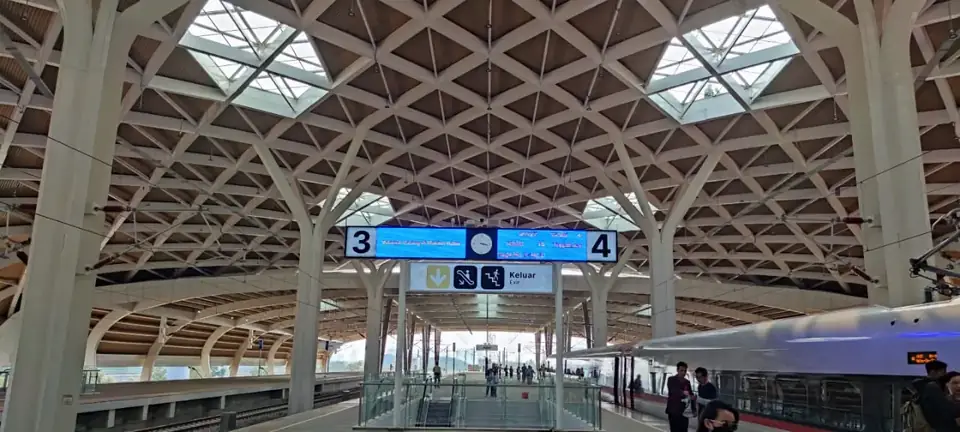
The more important the building, the higher its target at each earthquake level. For Halim High-Speed Railway Station, the pushover analysis used the maximum considered earthquake (MCE). For an earthquake of that size, the target was at least Life Safety. The result is covered in the final part of this series.
Tip: Agree the performance target with your engineer at the start of the project. Buildings that must keep operating after an earthquake, such as hospitals or data centres, need a higher target than an ordinary warehouse, and that target shapes the design from day one.
What performance levels mean for owners
| Level | After the earthquake | Business impact |
|---|---|---|
| Immediate Occupancy | Building can be reused after inspection | Short interruption |
| Life Safety | Occupants protected, structure needs repair | Temporary closure |
| Collapse Prevention | Building does not collapse but is unsafe to enter | Major repair or replacement |
A higher performance target usually calls for a stronger or stiffer structure, so the choice also affects construction cost. That is why the target is best agreed early by the owner, the architect and the structural engineer.
A performance level is a calculated result based on assumptions and a model, not a guarantee of the building's condition after a real earthquake. After a strong earthquake, the building still needs inspection by a competent engineer. If you see wide cracks, damaged columns or leaning parts, keep people away and call a structural engineer straight away.
Conclusion
Performance levels translate a pushover result into terms an owner can use: ready to use, needs repair, or close to collapse. The method is to divide the displacement at the performance point by the building height and compare it with the drift limits. For essential buildings, the target is also linked to risk categories in SNI 1726. If you want to know the performance level of your building, our team can help through our structural audit and evaluation service.
This article provides general information. Every project still needs to be analysed and calculated by a competent structural or geotechnical engineer, in line with the applicable SNI codes and regulations.
Sources
- Annin Hudaya, Sobah Nurul Sodik, James Theofilbert Sabas: Case Study of Performance Based Design Check on Halim High Speed Railway Station Project. Seminar & Short Course HAKI 2022, Hotel Borobudur, Jakarta, 23–25 Agustus 2022
- Wibowo, Purwanto & Yanto: Menentukan Level Kinerja Struktur Beton Bertulang Pasca Gempa (Media Teknik Sipil, 2010)
- BAB II Tinjauan Pustaka: SNI 1726:2019, MCER dan faktor keutamaan gempa (repositori Universitas Pembangunan Jaya)