Two buildings with the same height, shape and location can be designed for different earthquake forces. The reason is the seismic risk category in SNI 1726, Indonesia's standard for earthquake-resistant design of buildings. A building's function decides how serious the consequences would be if it were damaged, and those consequences are why a hospital is designed to a higher level than an ordinary office.
Risk categories in SNI 1726:2019
SNI 1726:2019 sorts buildings and non-building structures into four risk categories by function: how great the risk to human life is, and how important the building is after an earthquake.
| Risk category | In general | Example functions |
|---|---|---|
| I | Low risk to human life | Agricultural and fishery facilities, temporary facilities, storage warehouses, guard houses |
| II | Ordinary buildings not in I, III or IV | Housing, shophouses, markets, offices, apartments, malls, factories |
| III | High risk to human life if they fail | Cinemas, assembly halls, stadiums, healthcare facilities without surgery and emergency units, childcare, prisons, care homes |
| IV | Essential facilities that must keep working | Schools and educational facilities, places of worship, hospitals with surgery and emergency units, fire and police stations, emergency shelters |
This table is a summary. The full list, including industrial and utility facilities and buildings storing hazardous materials, is in the risk category table of SNI 1726:2019. The category for a specific building must be set by the structural engineer.
The seismic importance factor (Ie)
Each risk category has a seismic importance factor, Ie, which multiplies the design earthquake force:
- Risk categories I and II: Ie = 1.0
- Risk category III: Ie = 1.25
- Risk category IV: Ie = 1.5
Put simply, with everything else equal, the design earthquake force for a category IV building is 50% higher than for a category II building. This does not mean a stronger earthquake hits the hospital site. The earthquake is the same; the target is different. An essential building is expected to suffer less damage so it can stay in use.
The seismic design category rises too
Risk category affects more than the size of the force. Together with the site's ground-motion parameters (SDS and SD1), it also sets the seismic design category (SDC), labelled A to F. A higher SDC brings stricter requirements, such as limits on the structural systems allowed, height limits and special reinforcement detailing under SNI 2847:2019.
For example, for the same mid-range SDS value, a category I to III building may fall in SDC C, while a category IV building is already in SDC D. So a hospital on the same street as an office block can face stricter detailing rules.
Why hospitals are designed stronger
After a major earthquake, hospitals are needed most. Injured people arrive, operating theatres must work, and patients already admitted cannot simply be moved. That is why SNI 1726:2019 places hospitals with surgery and emergency units in risk category IV, while healthcare facilities without them fall in category III.
For hospital owners and designers, a few points matter:
- The main structure is designed with the higher Ie and the matching SDC.
- Non-structural elements such as ceilings, partitions, medical gas pipes and heavy equipment need proper anchorage. A building with an intact frame but fallen ceilings and toppled equipment still cannot treat patients.
- Changes of use must be checked. A clinic that later adds an operating theatre or an emergency unit may move to a higher risk category, so its existing structure needs to be reviewed.
Tip: Give your structural engineer the full building function from the start, including expansion plans for the next few years. Raising the risk category mid-design, or after the building is finished, costs far more than allowing for it at the outset.
Not just hospitals
Category IV also covers schools, places of worship, police and fire stations, and emergency command centres. Assembly halls and stadiums sit in category III because they hold many people at once. For building owners the message is simple: the building's function is design data, just as important as soil data and the architectural plans.
Stadin's experience with hospital buildings
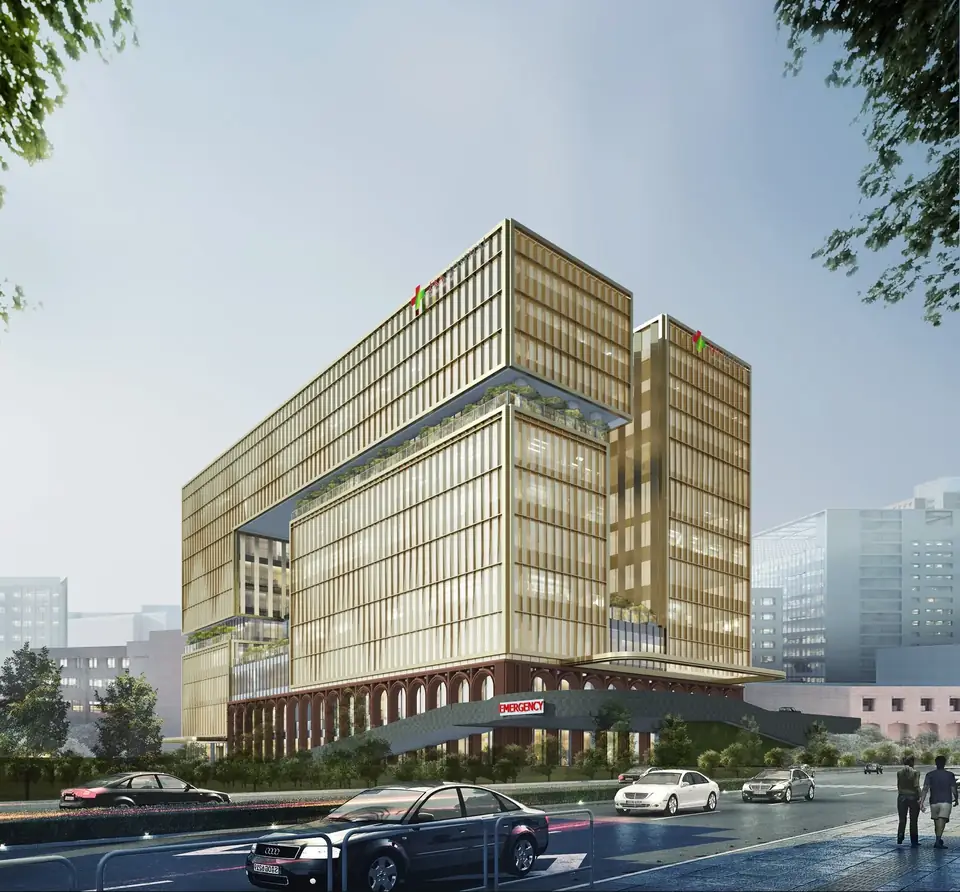
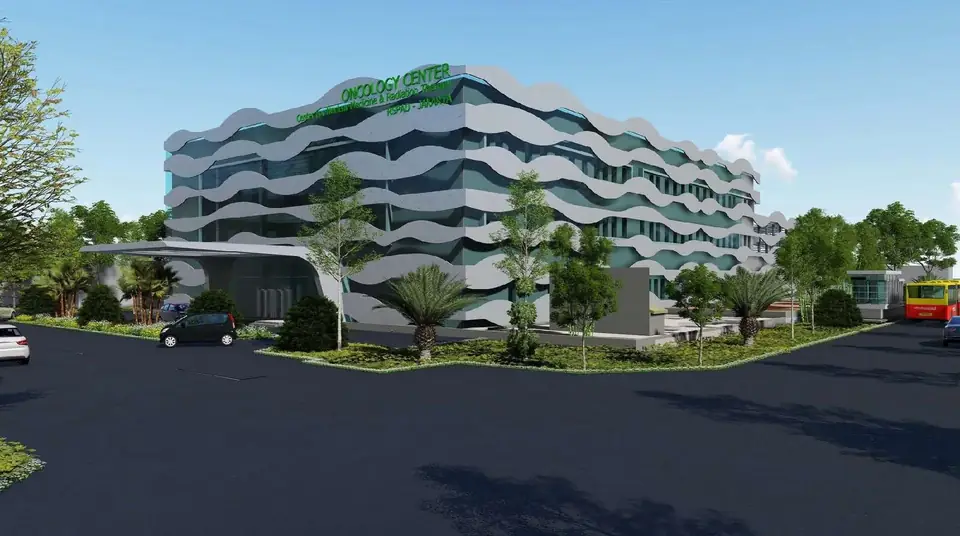
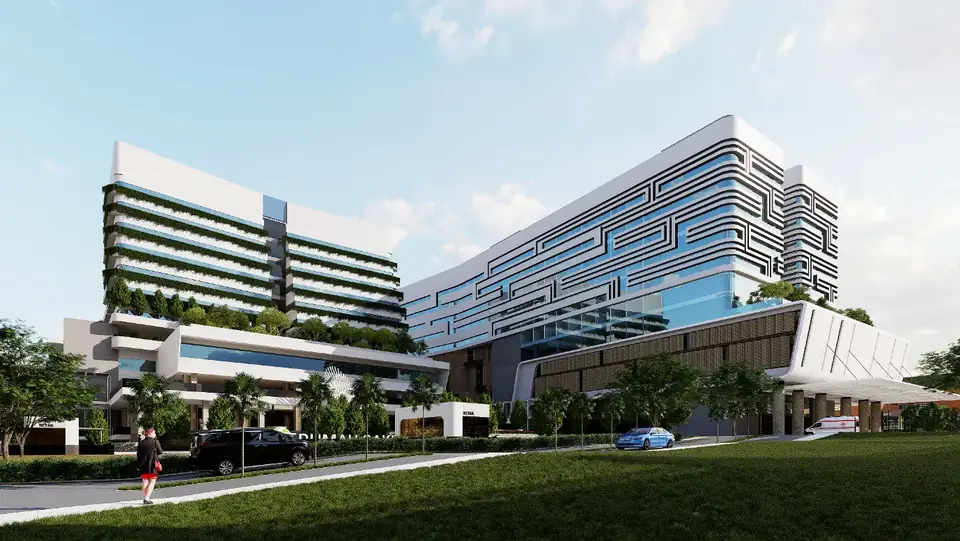
Stadin has designed the structures of several healthcare buildings, including the National Brain Centre Hospital (RS PON) with about 90,000 m² of floor area, EKA Hospital Puri with 49,000 m², and the Proton Beam Therapy building at RSPAD with 9,800 m². Healthcare projects call for close coordination between structure, medical equipment and service routes, because a building's performance after an earthquake depends on all of them.
Conclusion
Risk categories in SNI 1726:2019 are the standard's way of saying that not every building carries the same consequences when damaged. Hospitals with surgery and emergency units are in category IV, with an importance factor of 1.5 and stricter design requirements, because they must keep serving the public after an earthquake. Every building still needs calculation by a competent structural engineer.
Planning a hospital, school or other essential facility? Stadin's structural design team can help from the concept stage.
This article is general information. Every project still needs to be analysed and calculated by a competent structural or geotechnical engineer, in line with the applicable SNI codes and regulations.
Sources
- Tinjauan pustaka SNI 1726:2019 kategori risiko dan faktor keutamaan gempa (Universitas Pembangunan Jaya)
- Tinjauan pustaka SNI 1726:2019 kategori desain seismik (UWKS)
- Data proyek: company profile PT. Stadin Strukturindo Konsultan (2026)