Choosing a foundation is one of the first decisions in a building project, and one of the hardest to change once work has started. In Indonesia, the two deep foundation types used most often are bored piles and driven piles. Both carry the building's loads down to stronger soil, but they are built differently, carry different risks and suit different sites.
What is a bored pile?
A bored pile (also called a drilled shaft) is formed on site. The ground is drilled to the design depth, a reinforcement cage is lowered into the hole, and the hole is filled with concrete from the bottom up through a tremie pipe. To keep the hole from collapsing during drilling, contractors use a steel casing or a support fluid such as bentonite or polymer slurry.
Because nothing is hammered, bored piling is relatively quiet and causes little vibration. Large diameters are possible, so a single pile can carry a heavy column load. The trade-off is that pile quality depends heavily on site workmanship: a clean base, a stable hole and continuous concreting.
What is a driven pile?
A driven pile is a precast concrete element, such as a spun pile (a hollow round pile) or a square pile, made in a factory and then installed in the ground. It can be driven with a hammer, or pushed in by a hydraulic jacking rig (often called a jack-in pile), which is much quieter.
Factory production makes the concrete quality easier to control, and installation is fast. The length of one segment is limited by transport, so long piles are spliced, usually by welding the joint plates. Where the ground has hard layers or boulders, a pile can stop before reaching its design depth.
Quick comparison
| Aspect | Bored pile | Driven pile |
|---|---|---|
| How it is made | Cast in place | Precast, driven or jacked |
| Noise and vibration | Low | High when hammered, low when jacked |
| Installation speed | Slower per pile | Usually faster |
| Quality control | Depends on site workmanship | Factory-controlled pile quality |
| Diameter and capacity | Can be large, high capacity per pile | Limited to product sizes |
| Next to existing buildings | Usually safer | Vibration needs to be assessed |
| Waste material | Drilled soil must be removed | Almost none |
How to choose
No foundation type is always better. The right choice depends on a few factors.
- Soil data. A site investigation, such as cone penetration tests (CPT) and boreholes with standard penetration tests (SPT), shows how deep the firm layers are and how soft the soil above them is. Without this data, any bored-versus-driven comparison is guesswork.
- Building loads. Tall buildings and long-span structures produce heavy column loads. Large-diameter bored piles are often efficient here, but groups of driven piles can carry these loads too.
- Surroundings. On dense urban sites next to houses, offices or hospitals, vibration from pile driving can be a problem. Bored piles or hydraulically jacked piles are usually kinder to the neighbours.
- Access and schedule. Both drilling and driving rigs need working space. On an open site without noise limits, driven piles usually win on speed.
- Basements and groundwater. With deep basements, the piles must be designed together with the excavation, the retaining walls and the uplift from groundwater.
Tip: Ask your engineer to compare two or three foundation options at the concept stage. The cost and time difference between options is often larger than expected, and it is far cheaper to decide on paper than on site.
Myth: tall buildings always need bored piles
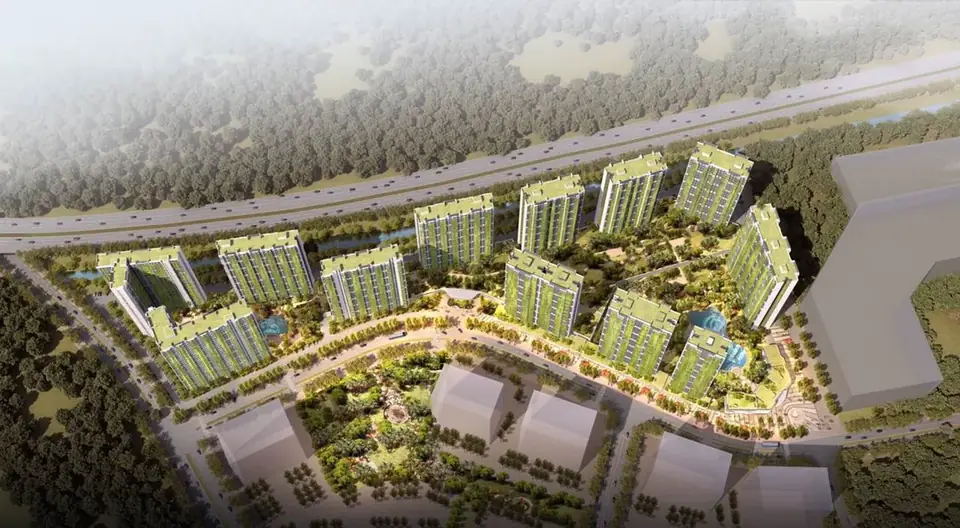
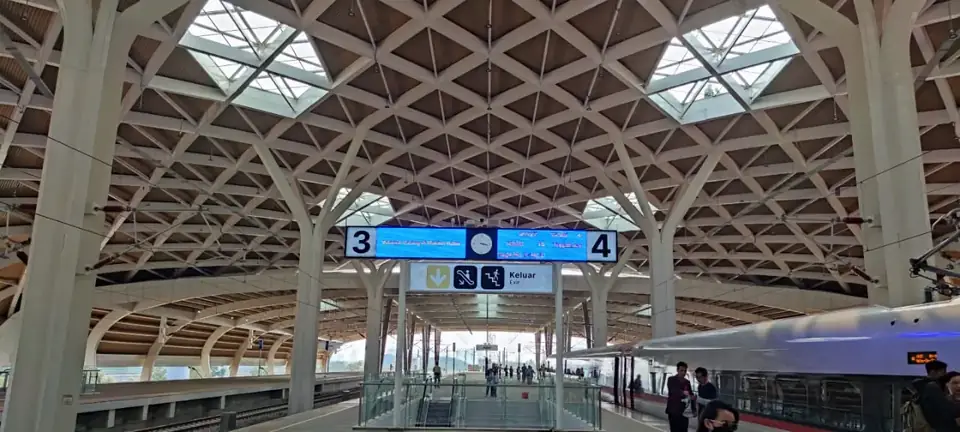
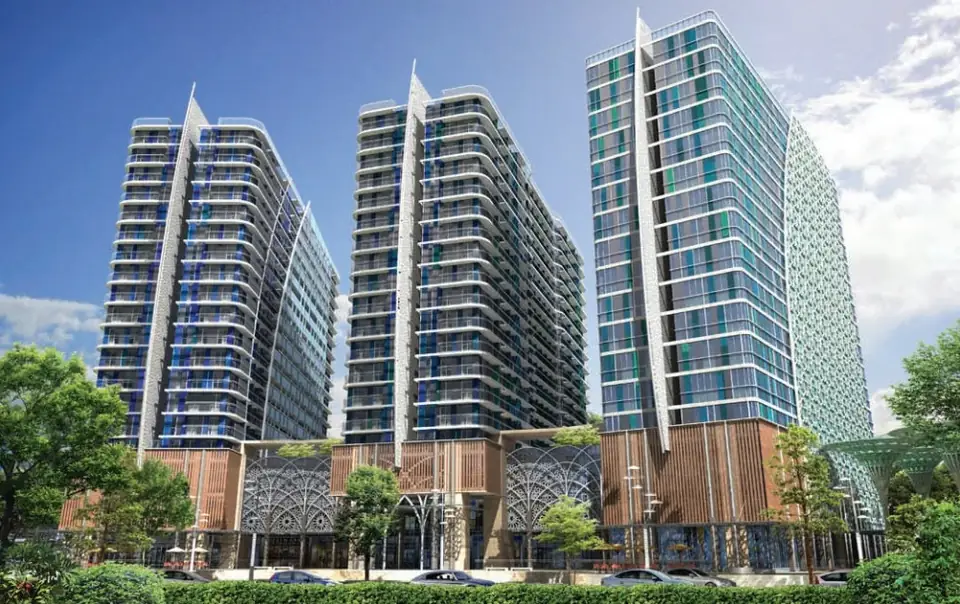
Projects engineered by Stadin show that both pile types are used for tall buildings. The 32-storey Office @ Rasuna Said, with three basements, sits on bored piles, as does Safa-Marwa Tower with four basements. On the other hand, the 24-storey EKKI Tower and the three 25-storey towers of Pulo Gadung Trade Center use driven piles. At Tegalluar High-Speed Railway Station, a combination of driven and bored piles was used.
In other words, building height alone does not decide the foundation type. The combination of soil data, loads, site conditions and schedule does.
Making sure the piles perform
A good design still needs to be proven on site. Common tests include:
- Static load tests to confirm that pile capacity matches the calculations.
- Dynamic tests (PDA), which are faster and can therefore cover more piles.
- Integrity tests (PIT) to detect defects in the pile shaft, especially important for cast-in-place bored piles.
- Driving records (final set) for driven piles, which show how far the pile moves at the end of driving.
The type and number of tests are set in the project specification, with reference to geotechnical design standards such as SNI 8460:2017.
Conclusion
Bored piles and driven piles are both reliable when they are chosen and built correctly. Start with an adequate site investigation, then compare foundation options on technical merit, cost and time. The best foundation is not the most expensive one, but the one that fits your soil and your building.
Need help choosing a foundation for your project? Stadin's geotechnical and foundation team can review your soil data and design the most efficient foundation option.
This article is general information. Every project still needs to be analysed and calculated by a competent structural or geotechnical engineer, in line with the applicable SNI codes and regulations.
Sources
- SNI 8460:2017 Persyaratan perancangan geoteknik (NSPK Ditjen Bina Marga)
- FHWA-NHI-10-016 Drilled Shafts: Construction Procedures and LRFD Design Methods (2010)
- FHWA-NHI-16-009 Design and Construction of Driven Pile Foundations, Volume I (2016)
- Data proyek: company profile PT. Stadin Strukturindo Konsultan (2026)